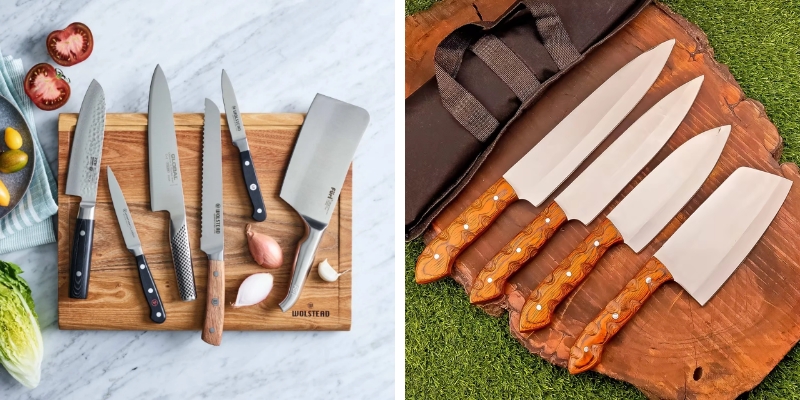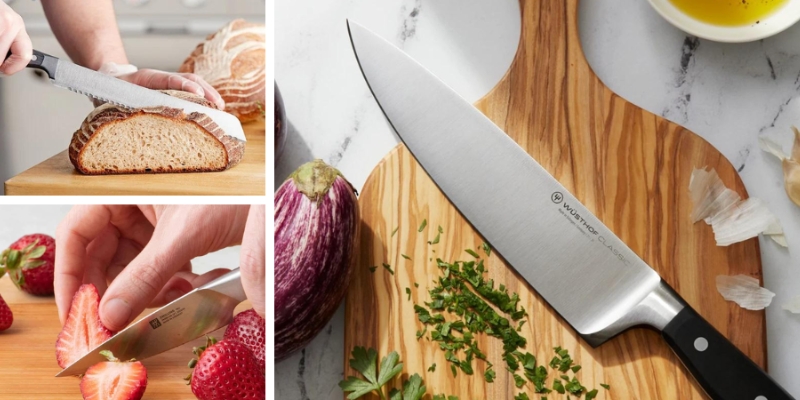
If you are setting up a home kitchen, you may be tempted to buy a large knife set with 10, 15, or even 20 pieces. You will fine most chefs keep different types of kitchen knives for their convenience. In reality, smart home cooks use only three to five essential kitchen knives for almost all daily cooking tasks.
[amazon image=”B008M5U1C2″]
Choosing the right knives can make food preparation faster, safer, and more enjoyable. In this guide, you will learn which knives are truly essential for most home kitchens, what each knife is used for, and how to build a practical knife collection without wasting money.
Why You Don’t Need a Large Knife Set
Many knife sets include specialty knives that are rarely used. For everyday cooking—chopping vegetables, slicing meat, cutting fruit, and preparing bread you can do nearly everything with a small group of well-chosen knives.
Benefits of owning only essential kitchen knives:
- Saves money
- Takes less storage space
- Easier to maintain and sharpen
- Encourages better knife skills
- Reduces clutter in the kitchen
The 5 Must-Have Kitchen Knives
Building a practical home kitchen does not require a large and expensive knife collection. In fact, most everyday cooking tasks can be handled efficiently with just a few well-chosen knives, and some cleaver knife skills when you deal with cutting. The five knives below are considered the most useful and versatile options for home cooks, covering everything from chopping vegetables and slicing meat to peeling fruits and cutting bread. By understanding the role of each knife, you can choose the right tools for your kitchen and make food preparation easier, faster, and safer.
1. Chef’s Knife (8-inch)
The chef’s knife is widely regarded as the most essential and versatile knife in any home kitchen. It is often called the workhorse of daily cooking because it can handle a broad range of food preparation tasks with speed and efficiency. Whether you are preparing a quick breakfast, a family dinner, or a more elaborate meal, this is usually the knife that spends the most time in your hand.

A good chef’s knife is designed with a curved blade that allows a smooth rocking motion, making chopping and slicing easier and more comfortable. It works well for both soft and firm ingredients, including vegetables, fruits, herbs, meat, and many other foods commonly used in everyday cooking. Because of its size and balance, it offers better control than smaller knives while still being nimble enough for precise cuts.
For beginners and experienced cooks alike, an 8-inch chef’s knife is generally considered the best all-around choice. It is large enough to handle most kitchen tasks but not so large that it becomes difficult to control. Investing in a high-quality chef’s knife can significantly improve your cooking experience, reduce preparation time, and make cutting safer and more efficient.
Convenient for:
- Chopping onions and other vegetables
- Slicing fruits and vegetables
- Dicing herbs and aromatics
- Cutting boneless meat and poultry
- Crushing garlic cloves
- Mincing herbs
- Portioning large ingredients
- General everyday food preparation
2. Paring Knife (3–4 inch)
A paring knife is one of the most useful small knives in a home kitchen and is designed for tasks that require precision, control, and delicate handling. While a chef’s knife is excellent for larger cutting jobs, it can feel too big and less manageable when working with small ingredients or performing detailed cuts. A paring knife gives you better control because the short blade allows your hand to stay closer to the food being prepared.

This knife is especially helpful for peeling, trimming, shaping, and other fine kitchen tasks that demand accuracy. It is commonly used when preparing fruits, vegetables, herbs, and decorative garnishes. The pointed tip also makes it easy to remove blemishes, seeds, and other small unwanted parts of ingredients.
Because of its versatility and ease of handling, a paring knife is considered an essential companion to the chef’s knife in most home kitchens. A 3.5-inch paring knife is often the most practical choice for everyday use, offering a good balance between precision and comfort.
Convenient for:
- Peeling fruits and vegetables
- Trimming strawberries and other berries
- Removing seeds and cores
- Cutting small garnishes
- Peeling potatoes
- Deveining shrimp
- Removing blemishes from produce
- Slicing small fruits and vegetables
- Detailed decorative cutting and food presentation
3. Serrated Bread Knife (8–10 inches)
Bread knives help for any home kitchen, especially when working with foods that have a firm or crusty exterior and a soft, delicate interior. Unlike a straight-edged knife, the serrated blade uses a gentle sawing motion that grips the surface of the food and cuts through it cleanly without applying excessive pressure. This helps prevent bread from being crushed, cakes from tearing, and soft fruits from becoming damaged during slicing.

Although it is commonly called a bread knife, this knife is useful for many other kitchen tasks. The long blade makes it easy to create even slices, while the serrations stay sharp for a long time compared with many straight-edged knives.
You rarely need to sharp the knives even once in a single year. It is particularly valuable for foods that are difficult to cut cleanly with a regular chef’s knife, such as ripe tomatoes or soft pastries. For most home cooks, a 9-inch serrated bread knife offers the best balance of reach, control, and versatility.
Convenient for:
- Bread and baguettes
- Sandwich loaves and rolls
- Cakes and pastries
- Tomatoes
- Soft fruits such as peaches and plums
- Slicing layered cakes
- Cutting delicate baked goods
- Foods with a tough skin and soft center
4. Utility Knife (Optional)
This knife is a versatile kitchen knife that sits between a large chef’s knife and a small paring knife in both size and function. Many home cooks appreciate it for everyday tasks where a chef’s knife may feel too large and a paring knife too small. Its medium-sized blade provides a good balance of control, precision, and cutting power, making it especially useful for quick food preparation and light-duty slicing.

This knife is often used for foods that do not require the heavy chopping ability of a chef’s knife but still benefit from a longer blade than a paring knife. It is comfortable for preparing snacks, sandwiches, cheese, fruits, and smaller vegetables, and it can be a convenient choice for fast kitchen tasks when you do not want to bring out a larger knife.
A 5- or 6-inch utility knife is generally the most practical size for home use, offering enough blade length for slicing while remaining easy to handle.
Convenient for:
- Sandwiches
- Cheese
- Small vegetables
- Sausages
- Quick cutting tasks
- Slicing fruits
- Trimming cooked meat
- Preparing snacks and lunch items
- Everyday light food preparation
5. Boning Knife (Optional)
A boning knife is a specialized kitchen knife designed for working with raw meat, poultry, and fish. It has a narrow, sharp blade that allows you to make precise cuts close to bones, joints, and connective tissue. This helps reduce waste and makes it easier to separate meat cleanly from the bone. We saw many cooks use knife what they get near hand, This is an kitchen knife mistake the make you tired for cutting and takes more time.
Some boning knives have a slightly flexible blade, which is especially useful for fish, while stiffer blades are often preferred for poultry and larger cuts of meat.

For home cooks who regularly buy whole chickens, fresh fish, or large cuts of meat, a boning knife can be a very useful addition to the kitchen. It provides better control and accuracy than a chef’s knife when trimming fat, removing skin, or preparing meat for cooking. However, if you mostly purchase pre-cut or boneless meat, this knife is not essential and can be considered an optional tool rather than a necessity.
Convenient for:
- Removing bones from chicken
- Filleting fish
- Trimming fat and silver skin
- Removing skin from meat and fish
- Separating meat from joints
- Cleaning and preparing raw poultry
- Trimming connective tissue
- Preparing whole cuts of meat for cooking
Final Thoughts
So, which knives are essential for most home kitchens? For nearly every home cook, the answer is simple:
- Chef’s knife (8-inch) – the primary all-purpose knife
- Paring knife (3–4 inch) – for precision and peeling
- Serrated bread knife (8–10 inch) – for bread and delicate foods
These three knives can handle the vast majority of everyday cooking tasks. Instead of spending money on a large knife block, invest in a few well-made, comfortable, and easy-to-maintain knives. A sharp chef’s knife, a precise paring knife, and a reliable bread knife will make your kitchen more efficient, improve your cooking experience, and provide the best long-term value for most home kitchens.